
Verdun, France
Verdun Battlefield Tour with Expert Historian — Forts, Trenches & Douaumont Ossuary
from $622.75USD
Loading the next place…
Gathering stories, stays, and experiences for you.
VAYCAI · ATTRACTION GUIDE
Fort Douaumont anchors Verdun's battlefield landscape, a raw and accessible site where short hikes, interpretive trails and panoramic vantage points stack into a concentrated day of exploration. Pair a morning walk across the fort’s ruined terraces with an afternoon at the Douaumont Ossuary, or extend into cycling loops along the Meuse for a longer active day of history, quiet reflection and open-air hiking.
Explore experiences ↓Your guide to places, experiences, and adventures.
THE GOOD STUFF STARTS HERE
Verdun, France

Verdun, France


Listed starting prices may vary by option, travel date and group size. Confirm the final total and availability on Viator. Sponsored links: we may earn a commission from qualifying bookings.
STORIES WORTH GOING FOR
GET TO KNOW THE PLACE
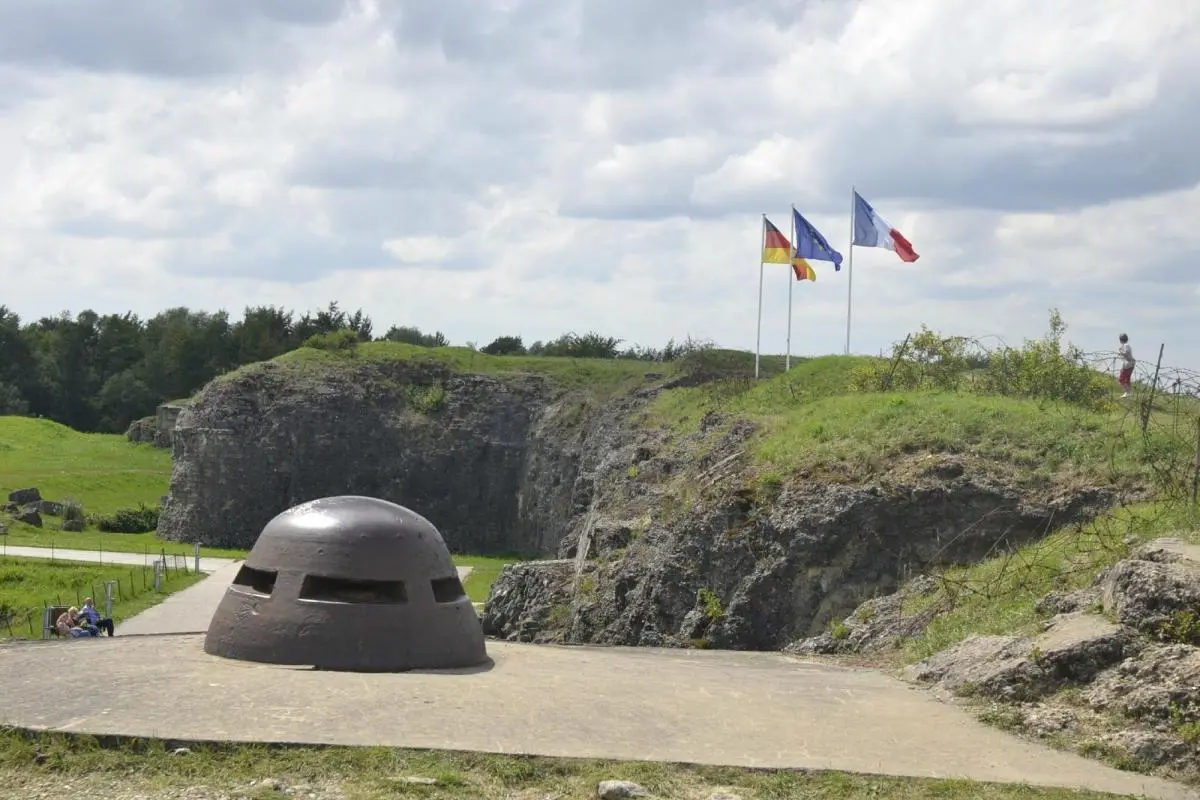
You arrive to wind that moves across low stone walls and long, grass-covered mounds. Fort Douaumont sits like a half-buried island of concrete on a gentle hill — an artifact of engineering and a mute witness to one of Europe’s most intense winter campaigns. The site rewards both quick visits and slow, study-focused days that combine fieldwalking with museums and nearby memorials.
Fort Douaumont’s bones tell a compact story that blends military engineering, geology and the human cost of industrialized warfare. Built on a low limestone ridge that overlooks the Meuse valley, the fort’s reinforced concrete and earthen revetments were designed to survive heavy bombardment; their scars now host wildflowers and grasses that shift in the wind. The surrounding battlefield is a patchwork of ridgelines, chalky soils and reforested trenches that influence how paths were laid and how visitors move through the landscape. Local museums and interpretive panels use maps and artifacts to anchor what you see into a timeline that is understandable without specialist knowledge.
Practical planning matters here. Fort Douaumont is reachable by short drives from Verdun and works as a half-day or full-day experience depending on how you stack activities: a focused morning at the fort plus the Ossuary makes for a sober half day; add a cycling loop along the Meuse or a guided battlefield walk to stretch into a full active day. Paths are generally short but uneven; good walking shoes and steady footing are essential. Weather changes quickly on exposed ridges, so layer up and plan for wind, rain or sun in a single day. Weekdays are quieter and allow for contemplative photography or solo reflection; weekends draw small groups, especially in summer.
Combine Fort Douaumont with nearby sites to get a fuller sense of the Verdun story. The Douaumont Ossuary and local museums contextualize the field evidence you’ll see at the fort, while quieter memorials and cemetery groves offer spaces for reflection. If you prefer to stay active, route a bike ride along the Meuse with short stops at key viewpoints and interpretive stops; for deeper dives, a guided walk with a knowledgeable local will point out subtle terrain features and explain how geology shaped defenses. Respect the site: stick to marked paths, avoid climbing on fragile ruins, and treat memorials with quiet consideration. Bring water, plan outdoor time for morning light, and allow extra time to absorb the layered history.
PLAN YOUR VISIT
April, May, June, September, October
Spring and fall bring crisp air and good visibility for battlefield walking; summers are warm and occasionally stormy, and winters are quiet but can be cold and muddy. Wind is a constant factor on exposed ridges.
The busiest period is late spring through summer when tour groups and weekend visitors increase; book accommodations and guided tours in advance and aim for early starts to avoid midday crowds.
Late fall and winter offer solitude and lower prices for lodging, but expect muddy paths and potentially reduced museum hours; respect seasonal site limitations and dress for colder, wetter conditions.
PACK WITH PURPOSE
FIND YOUR PACE
For experienced adventurers who want extended fieldwork, multi-site routes, or photography-focused outings in variable weather.
Ideal for visitors seeking short, accessible history walks and quiet viewpoints with minimal technical challenge.
For travelers comfortable with longer walking loops and mixed-surface cycling who want more context and distance.
BEFORE YOU GO
No, the fort is approachable on your own with interpretive panels, but a guided walk enhances understanding of tactical and terrain details you might otherwise miss.
Plan a half-day for the fort and nearby markers; allow a full day if you add the Ossuary, museum visits or a cycling loop along the Meuse.
Some viewing areas and paths are uneven; while main outdoor viewpoints are reachable, interior access may be limited—check local visitor information for specific accessibility details.
Yes, quiet country roads and riverside paths make cycling a good option; choose routes and distances that match your comfort and be prepared for short stretches of uneven surfaces.
Basic parking-area facilities may offer vending or seasonal kiosks, but plan to bring water and snacks, especially if you’re cycling or hiking between sites.
Shift to indoor options like the Verdun museums and the Douaumont Ossuary, or delay outdoor segments—wind and rain make exposed ridges uncomfortable and slippery.