Gathering stories, stays, and experiences for you.
VAYCAI · ATTRACTION GUIDE
Samphire Hoe Visitor Guide
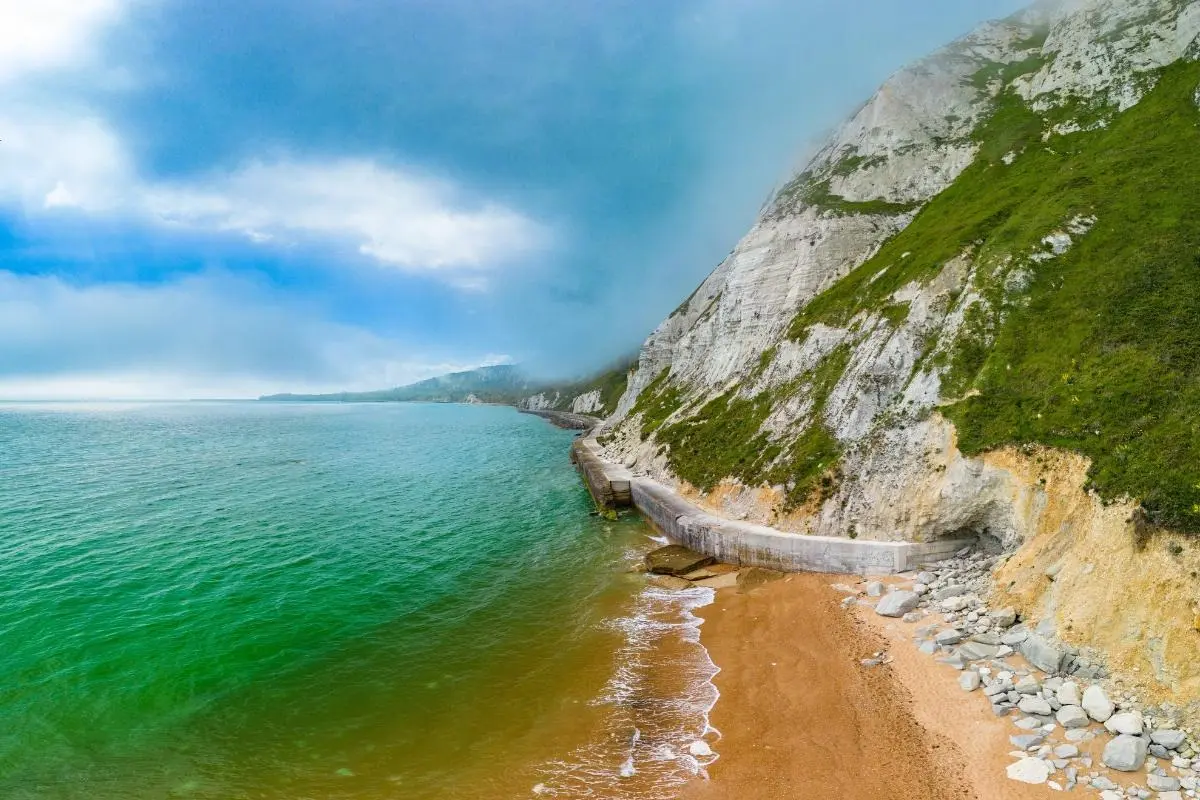
Samphire Hoe is a compact, dramatic stretch of reclaimed coastline tucked beneath the White Cliffs near Dover where easy trails, seabird colonies, and raw sea views stack into a half-day of outdoor adventure. Pair a brisk coastal walk with wildlife watching and a detour to cliff-top vantage points for short, high-impact outings that fit into larger Kent coast itineraries.
Below the chalk cliffs, Samphire Hoe feels intentional—the sea keeps its distance while the land, built from tunnel spoil, holds steady. Trails are short, views are immediate, and wildlife is active. It’s a place to stretch legs between longer coastal drives or to anchor a half-day of low-impact outdoor adventure.
The first thing you notice is the meeting of two geologies: the pale chalk of the White Cliffs rising like a held breath, and the darker, gravelly plain of Samphire Hoe that was created when engineers pushed spoil from the Channel Tunnel into the sea. That history gives the reserve its shape and its purpose. The terrain is modest—low grassy hummocks, scrub, and compacted tracks—but its position on the Channel makes every gust and turning light dramatic. Sea birds claim the headland and the water nudges the shore with a steady cadence; on clear days France sits faint on the horizon.
Planning here is straightforward but sensible. Samphire Hoe is reachable from Dover and nearby coastal towns by car and public transport; a short walk from parking puts you on level paths that are mostly well maintained. Time your visit for lower winds if you’re sensitive to exposure and bring a windproof layer; summer brings the most visitors, while shoulder seasons deliver quieter watching and cooler hiking. Because the site is compact, you can stack experiences: a morning coastal loop, lunch at a nearby village, and an afternoon at Dover Castle or a ferry crossing.
Priorities on a short visit are clear. Walk the shoreline first to get the scale, then find a sheltered bench and watch for migrating waders and terns. If you’re building a longer Kent itinerary, link Samphire Hoe with cliff-top walks on the White Cliffs, a seaside town coffee stop, and a scenic country drive across the Downs. Practical details matter: puddles and muddy patches can appear after heavy rain, so waterproof footwear and a compact map or offline route are worth carrying. Keep to paths, give nesting birds space, and treat the place as both a modern landscape and a natural refuge.
PLAN YOUR VISIT
When to go.
Best months
April, May, June, July, August, September
Weather
Spring and early autumn offer clear walking days and active birdlife; summers are milder but can be breezy and sunny; winters are quiet but exposed and gusty. Check local forecasts for wind and rain before heading out.
Peak season
The busiest period runs through the summer months, particularly July and August; start early to avoid crowds on short walks and book nearby accommodation well in advance if you plan an overnight stay.
Beyond the peak
Off-season visits (late autumn through early spring) mean fewer people and dramatic skies; expect muddy patches and stronger winds—choose shorter routes and wear waterproof footwear.
PACK WITH PURPOSE
What to bring.
optional
Binoculars for seabirds
Action camera or telephoto lens
Picnic kit
essential
Layered clothing for wind and sun
Water bottle (at least 1L)
Sturdy footwear with good traction
Sun protection (hat, sunscreen)
Offline map or phone with cached route
Basic first-aid kit
recommended
Light rain shell or windproof jacket
Headlamp or compact torch
Trekking poles for stability on gravel
Dry bag for electronics
FIND YOUR PACE
Choose your kind of adventure.
advanced
Advanced outdoor travelers can use Samphire Hoe as a launch point for longer coastal traverses, guided paddles, or focused wildlife photography sessions.
Tidal-aware sea kayaking or paddling with a guide
Long-distance coastal hike linking to the North Downs Way
Early-morning or late-light wildlife and landscape photography
beginner
Short, mostly level paths make Samphire Hoe an approachable outing for beginners looking for coastal scenery and wildlife watching.
Easy shoreline loop and viewpoint stops
Family birdwatching and picnic
Landscape photography from the promontory
intermediate
Intermediate visitors can extend the visit by linking to nearby cliff-top paths and exploring longer coastal routes around Dover.
Combined walk with nearby cliff-top sections
Guided birdwatching session or naturalist tour
Half-day coastal exploration with a village stop
BEFORE YOU GO
Your questions, answered.
Do I need a guide to visit Samphire Hoe?
No—Samphire Hoe is self-guided and compact with waymarked paths, but hiring a local guide can add birding or geology insight if you want deeper context.
How long should I plan to spend there?
Plan for 1–3 hours for the reserve itself; you can combine it with other nearby sights for a half- or full-day itinerary.
Is Samphire Hoe accessible by public transport?
Yes—Dover is served by trains and buses; expect a short onward bus or taxi ride from the town center to the reserve car park or trailhead.
Are dogs allowed on the trails?
Dogs are typically allowed but should be kept under control and on paths, especially during bird nesting season; check local signage for any seasonal restrictions.
What safety concerns should I know?
Watch for strong winds, stay off cliff edges, and avoid scrambling on chalk cliffs; bring warm layers and check tide and weather conditions if planning to explore shoreline areas.
Can I combine Samphire Hoe with other outdoor activities nearby?
Yes—pair it with cliff-top walks on the White Cliffs, waterside photography, a coastal drive, or organized paddling excursions from nearby towns.