
Loading the next place…
Gathering stories, stays, and experiences for you.
Loading the next place…
Gathering stories, stays, and experiences for you.
VAYCAI · ATTRACTION GUIDE
Aposelemis Canyon is a compact slice of Crete where limestone walls, olive-scented slopes, and a quiet reservoir stack into a day of outdoor variety. Hike canyon spits and ridgelines, pair viewpoints with a scenic drive or a taverna stop, and add a mountain-bike loop or paddle depending on water and season. It’s straightforward to combine active terrain with local culture in a single day from Agios Nikolaos.
Explore experiences ↓Your guide to places, experiences, and adventures.
THE GOOD STUFF STARTS HERE
Listed starting prices may vary by option, travel date and group size. Confirm the final total and availability on Viator. Sponsored links: we may earn a commission from qualifying bookings.
STORIES WORTH GOING FOR
GET TO KNOW THE PLACE
Aposelemis Canyon squeezes big geology into a compact footprint: tight limestone gorges give way to open reservoir panoramas and cultivated slopes. The location is ideal for travelers who want active outings without long transfers from Agios Nikolaos, and for those who like to combine a hike with cycling or a scenic drive and a coastal evening.
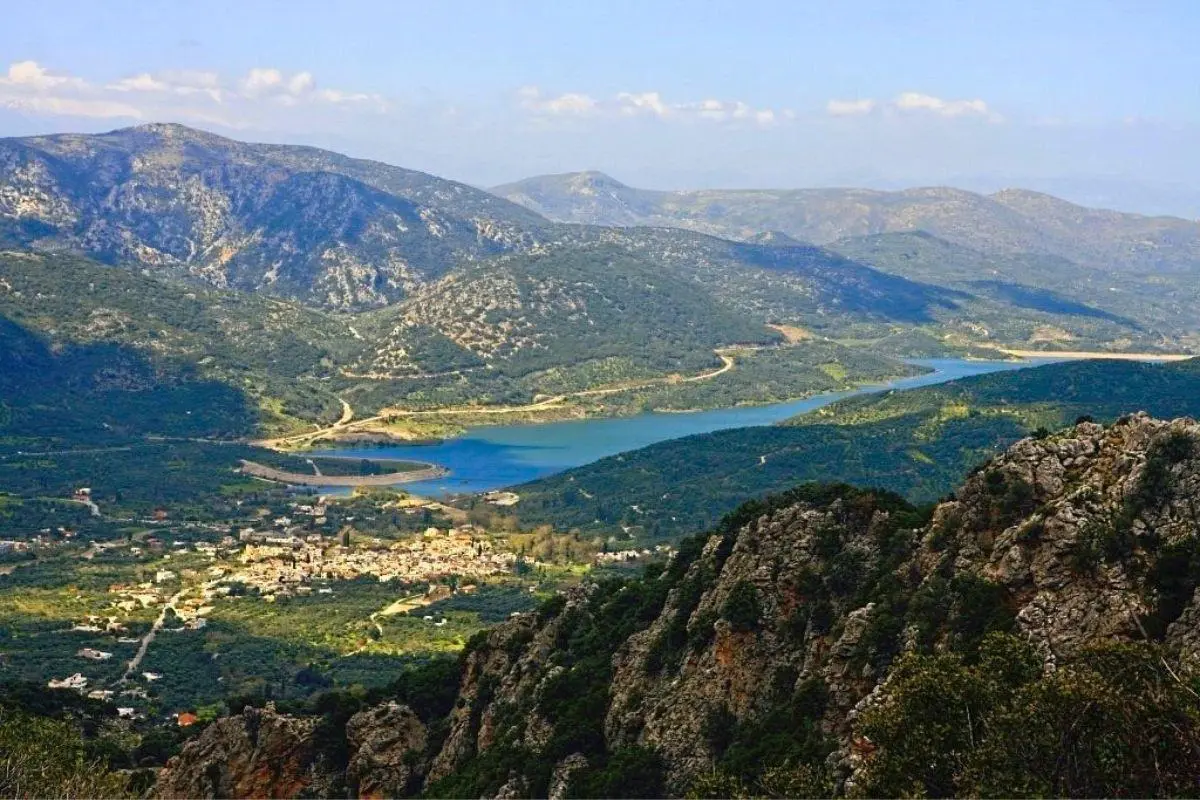
You walk into Aposelemis and the landscape speaks in clean, Mediterranean lines: jagged limestone ribs, terraces where olive trees hold the slope, and a reservoir that reflects the sky like a deliberate pause. The canyon is carved by seasonal streams that nudge and rearrange talus fields; in spring the route feels lively with runoff, while in late summer the streambeds are quieter and heat hangs low. Geologically, the area is a textbook of karst processes—caves, sinkholes, and steep-walled cuts—so expect abrupt transitions from open ridge to narrow passage. That variety is why day trips here feel like a sampler: short sections of focused trail work, then open viewpoints and easy rolling tracks.
Human history is stitched into the terrain. Shepherd tracks and terraced fields are older than most maps. Small villages nearby keep the island rhythm—coffee in the morning, slower afternoons, tavernas that open to feed hikers and farmers alike. Practical access is straightforward from Agios Nikolaos: a short drive, then dirt-road approaches to several trailheads. Trails are unpretentious but occasionally rough; good footwear and attention to route-finding matter. Cell coverage is often usable near the reservoir and roads but can fade inside tighter gorges. Plan conservatively for daylight, and factor in a village stop for water or a late-summer meal.
For planning, prioritize the element you most want—canyon walking, views, biking, or paddling—and build the rest around it. Morning light carves the cliffs; afternoons soften the reservoir and favor a leisurely taverna finish. Weather shifts can be sudden in shoulder seasons; check conditions and verify reservoir access if you hope to paddle. If you want technical scrambling or long backcountry traverses, hire a local guide or book a guided half-day so you can navigate safely and learn the best microroutes without guessing.
PLAN YOUR VISIT
April, May, June, September, October
Spring and fall provide mild temperatures and the best conditions for hiking; summer is hot and dry with strong sun, and winter can bring rain and cooler weather in higher terrain.
July and August see the most visitors in eastern Crete; if visiting then, start hikes early and book accommodations in Agios Nikolaos ahead of time.
Winter and late autumn offer solitude and lower prices, but expect muddy tracks and occasional closure of informal access roads; wear waterproof footwear and check local access before heading out.
PACK WITH PURPOSE
FIND YOUR PACE
Technical routes, extended backcountry navigation, and multi-modal days combining hiking, biking, and paddling.
Short, low-exposure walks and scenic viewpoints suitable for most active travelers.
Longer canyon sections, mixed terrain hikes, and off-road cycling for those comfortable with uneven footing.
BEFORE YOU GO
You can do non-technical canyon walks self-guided if you have basic navigation skills, but hiring a local guide adds safety, local knowledge, and route options—especially in spring when water levels change.
Streams can rise quickly; avoid narrow sections and check recent weather. If heavy rain is forecast or recent, postpone or choose an alternative ridge walk.
Plan a half-day for a focused hike plus viewpoints, or a full day if you add biking, paddling, or a long scenic drive across the Lasithi Plateau.
Paddling may be possible depending on water levels and local rules; verify access and regulations locally and use a dry bag for gear.
Renting a car is the most flexible option; taxis or organized tours are available but may limit where you can stop and for how long.
Slow down, test each step, use trekking poles if you have them, and avoid risky moves; when in doubt, turn back to a safer line.